Water Heater Repair in Bay Terrace, Queens
Restoring consistent, reliable hot water across Bay Terrace, Clearview, and Fort Totten. We troubleshoot gas burners, faulty thermocouples, leaking valves, and optimize indirect water storage tanks connected to home heating boilers.
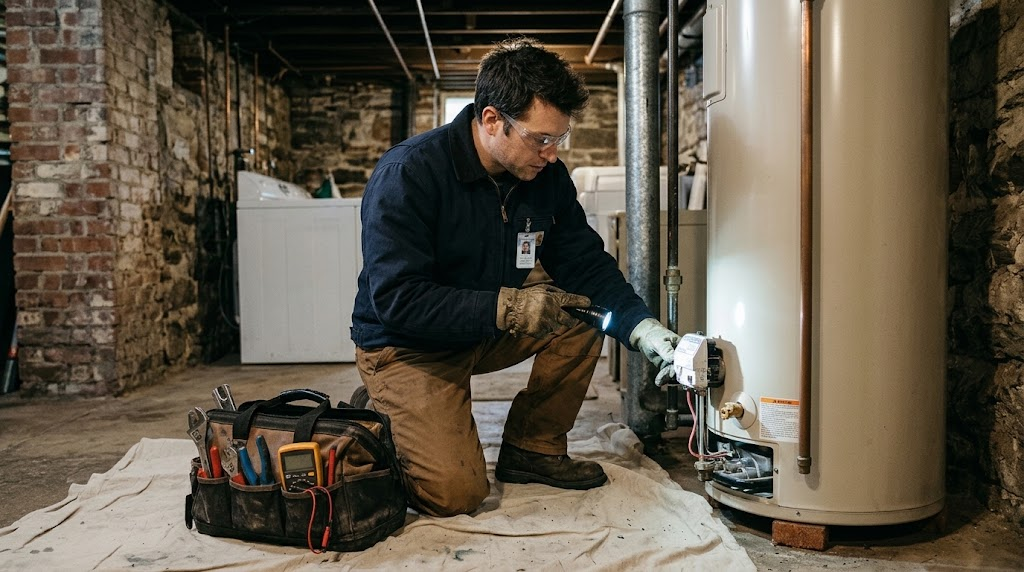
Diagnosing Loss of Hot Water & Temperature Fluctuations
Experiencing a sudden loss of domestic hot water or struggling with fluctuating shower temperatures is a significant household disruption. In Bay Terrace residential properties—from single-family homes near 18th Avenue to cooperative units and townhouses near Clearview Park—domestic hot water is produced either by standalone atmospheric gas water heaters, electric storage vessels, or indirect hot water tanks piped as a dedicated zone from the central space-heating boiler. Identifying the underlying cause requires targeted diagnostic testing of electrical controls, fuel delivery, and fluid dynamics.
In atmospheric gas water heaters, ignition failure is among the most frequent service calls. A faulty thermocouple or defective thermopile will fail to register the pilot flame's millivolt output, prompting the gas control valve to shut down gas flow as a safety measure. Dust accumulation in burner intake screens, corroded pilot orifices, or failed piezoelectric igniters prevent dependable ignition. In electric storage systems, dual heating elements work sequentially; if the upper thermostat trips or the lower immersion element burns out due to scale encrustation, the tank yields lukewarm water or runs cold within minutes.
Many residences with hydronic or steam boilers utilize indirect hot water storage cylinders. In these configurations, a failure in the dedicated circulator pump, sticking flow-check valve, or an air-bound hydronic coil will prevent boiler heat from transferring to the domestic water supply, even while home radiators function normally. Read how central boilers power these systems on our Boiler Repair in Bay Terrace homepage.
Common Water Heater Faults
- Zero Hot Water: Tripped high-limit switch, extinguished pilot, or gas valve lockout.
- T&P Valve Dripping: Dangerous thermal expansion or failed safety valve seat.
- Rumbling Tank Noises: Heavy mineral sediment boiling at the tank bottom.
- Rusty or Discolored Water: Sacrificial anode rod fully depleted, exposing tank steel.
- External Pipe Leaks: Corroded dielectric unions or brass shutoff packing glands.
Immediate Water Heater Help: If your tank is leaking water onto basement floors, shut off the cold supply valve and call (315) 202-8009.
Repair vs. Replacement: Evaluating Tank Condition & Safety
Knowing whether to repair an individual water heater component or invest in complete equipment replacement depends directly on the physical integrity of the pressure vessel.
When Repair is Practical
When the outer steel jacket and internal glass-lined storage tank remain structurally sound, component replacement is the cost-effective and sensible solution. Replaceable mechanical parts include:
- Gas control valves and electronic ignition control modules
- Thermocouples, thermopiles, and burner assemblies
- Upper and lower electric heating elements and dual thermostats
- Dripping brass drain valves and weeping supply pipe fittings
- Sacrificial magnesium or aluminum anode rods to extend lifespan
Experiencing fixture dripping at sinks? Check our Faucet Repair & Installation page for plumbing valve care.
When Replacement is Unavoidable
Once water begins seeping through the bottom seam of the water heater jacket or damp insulation appears around the base, the inner steel tank has fractured due to galvanic corrosion. Under New York City plumbing codes and manufacturer specifications, leaking pressurized vessels cannot be welded, sealed, or epoxied.
Operating a compromised vessel risks catastrophic flooding, potentially releasing 40 to 75 gallons of scalding water into your basement. In such cases, we facilitate prompt, code-compliant replacement with high-recovery atmospheric, power-vent, or indirect tanks.
Learn how upgrading to an indirect tank pairs with your central plant on our Boiler Replacement in Bay Terrace page.
Sediment Flushing, Anode Inspection & Maintenance Advice
Proactive maintenance substantially extends the operational lifespan of both gas and electric water heaters while maintaining peak energy transfer.
1. Annual Sediment Flushing
Calcium carbonate and minerals precipitate out of heated water, settling into a thick layer at the tank bottom. This insulating blanket overheats the lower steel head and produces loud popping sounds. Annual power-flushing removes debris and prevents premature bottom burnouts.
2. Sacrificial Anode Rod Check
The anode rod intentionally corrodes to protect the inner steel vessel from galvanic decay. Replacing the anode rod every 3 to 5 years prevents corrosive ions from attacking tank walls, frequently doubling the usable operational lifespan of your water heater.
3. Thermal Expansion Testing
When modern backflow preventers or check valves are installed on municipal water mains, heated water has no room to expand, creating severe hydrostatic pressure spikes up to 150 PSI. Installing a properly pressurized thermal expansion tank protects fixtures and prevents dripping relief valves.
Water Heater Repair Questions & Answers
Need Rapid Water Heater Diagnosis in Bay Terrace?
Call directly to speak with an experienced technician about your hot water symptoms, gas pilot issues, or relief valve leaks.